Death Toll of Communism
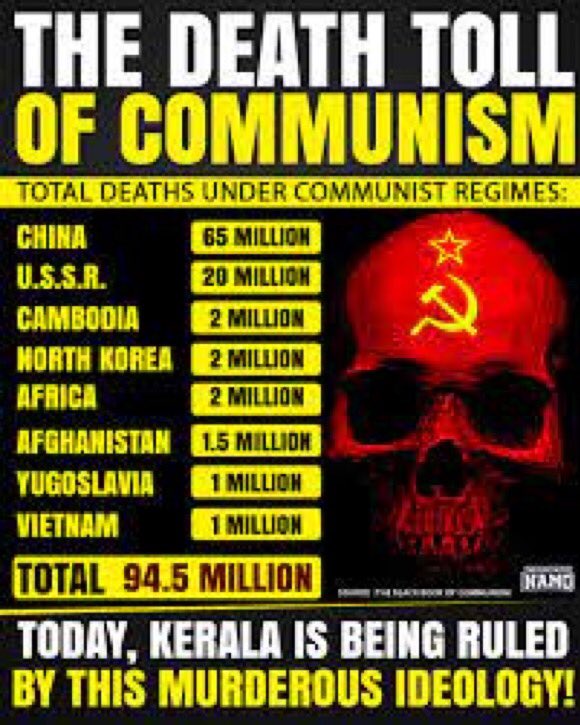
In the annals of human history, few ideologies have promised utopia only to deliver apocalypse on such a staggering scale. From the Bolshevik Revolution’s thunderous “Peace, Land, and Bread” in 1917 to the fading echoes of Mao’s Cultural Revolution in the late 1970s, communism swept across continents like a crimson tide. Over roughly a century, it ensnared nations from the frozen steppes of Russia to the rice paddies of Vietnam, claiming to liberate the proletariat while binding them in chains of terror. But beneath the slogans and five-year plans lay a grim arithmetic: an estimated 100 million lives extinguished—not by the accidents of war or nature, but by deliberate policies of starvation, execution, and erasure. en.wikipedia.org +2 This is the story of communism’s human cost, a century of engineered death that demands reckoning.The figure of 100 million is no hyperbole born of hindsight bias. It emerges from meticulous scholarship, most notably The Black Book of Communism (1997), a compendium by historians like Stéphane Courtois, Nicolas Werth, and Jean-Louis Margolin. Drawing on declassified archives, survivor testimonies, and demographic analyses, the book tallies over 94 million direct victims—executions, famines, gulags, and genocides—across communist regimes, with Courtois rounding to 100 million to encompass indirect tolls and lesser-documented atrocities.
en.wikipedia.org Subsequent research, including R.J. Rummel’s democide studies and updates from the Victims of Communism Memorial Foundation, affirms this range: 85–110 million, surpassing the combined battle deaths of World War I and II. hawaii.edu +1 These were not collateral damages but the architecture of the ideology itself—centralized control wielded as a scythe.The Anatomy of Atrocity: A Global LedgerCommunism’s body count defies easy summarization, as regimes varied in fervor and method. Yet patterns emerge: forced collectivization sparking famines, purges targeting “class enemies,” and labor camps grinding souls into dust. Below is a breakdown of the deadliest chapters, based on consensus estimates from The Black Book and allied sources.
| Regime/Period | Estimated Deaths (Millions) | Primary Causes | Key Events |
|---|---|---|---|
| Soviet Union (1917–1991) | 20–25 | Executions, gulags, induced famines | Great Purge (1936–1938: 700,000+ shot); Holodomor (1932–1933: 3–7 million Ukrainians starved); Gulag system (18 million imprisoned, 1.6 million dead). hudson.org +1 |
| China under Mao (1949–1976) | 65–72 | Great Leap Forward famine, Cultural Revolution purges | Great Leap (1958–1962: 45 million from starvation and overwork); Cultural Revolution (1966–1976: 1–2 million killed, millions more in chaos). en.wikipedia.org +1 |
| Cambodia under Khmer Rouge (1975–1979) | 1.7–2.5 | Executions, forced labor, starvation | Killing Fields: 25% of population (2 million) perished in under four years, targeting intellectuals and minorities. hawaii.edu |
| North Korea (1948–present) | 1.7–3 | Famines, prison camps | Arduous March famine (1994–1998: 240,000–3.5 million); Ongoing kwanliso camps hold 80,000–120,000. cato.org |
| Eastern Europe & Other Satellites (1945–1991) | 1–2 | Political repression, deportations | Romanian purges under Ceaușescu; East German Stasi executions; combined toll from USSR-backed regimes in Poland, Hungary, etc. hudson.org |
| Vietnam, Laos, Africa, etc. (Various) | 1–5 | Wars of liberation, reeducation camps | Vietnam’s land reform (1950s: 100,000+); Ethiopian Red Terror (1977–1978: 500,000). reason.com |
| Total | ~100 | All causes | Excludes war combatants; focuses on civilian democide. en.wikipedia.org +1 |
This table captures the core: 70–80% from famines and labor exploitation, the rest from bullets and batons. China’s Great Leap Forward alone rivals the Holocaust in scale, a catastrophe born of Mao’s utopian zeal to surpass Britain’s steel output—resulting in backyard furnaces and cannibalism reports from rural hellscapes.
researchgate.netEchoes of the Gulag: Personal and Cultural ScarsNumbers, stark as they are, elide the human texture. Consider the Holodomor: Soviet grain requisitions left Ukrainian villages skeletons, children eating grass, parents burying neighbors in mass graves. Eyewitnesses like Gareth Jones documented the horror in 1933, only to be smeared as fascist propagandists by a complicit Western press.
heritage.org In Cambodia, Pol Pot’s Year Zero reset society to agrarian purity, turning schools into torture chambers where “intellectuals” (anyone with glasses) met the angular blade.Beyond death, communism ravaged cultures: Stalin dynamited Moscow’s Christ the Savior Cathedral; Mao’s Red Guards torched libraries and paraded professors in dunce caps. An estimated 30 million more languished in camps, their lives a slow bleed of dysentery and despair.
aei.org Economically, it hollowed nations—North Korea’s GDP per capita lags decades behind South Korea’s, a bifurcated peninsula screaming indictment.The Controversy: Numbers in the CrossfireNo reckoning is tidy. Critics assail the 100 million as inflated, arguing it conflates natural famines with policy (e.g., Soviet droughts) or includes WWII combatants. reddit.com +1 Noam Chomsky likened blaming communism for China’s famine to pinning India’s colonial deaths (up to 100 million) on capitalism.
africacheck.org Even Black Book contributors like Werth disputed Courtois’s fudged totals for shock value.
en.wikipedia.org Fair points—historians like J. Arch Getty emphasize diverse “communisms,” not a monolith.
africacheck.org Yet the core holds: These regimes, wedded to Marxist-Leninist absolutism, engineered surpluses of suffering unmatched by peers. Rummel’s data pegs communist democide at two-thirds of 20th-century government killings, dwarfing fascism’s 28 million.
reason.comLegacy: From Berlin Wall to Beijing’s BillboardsAs the Berlin Wall crumbled in 1989—sparking a three-day exodus of three million East Germans westward—communism’s empire fractured.
cato.org Russia pivoted to oligarchic capitalism; Vietnam embraced markets. But ghosts linger: China’s one-party rule, Cuba’s ration books, North Korea’s nukes. Globally, the ideology’s allure persists among the young, romanticizing Che Guevara while airbrushing the Killing Fields.
quillette.comThe 100 million remind us: Ideologies that subordinate the individual to the state risk the pyre. As President George W. Bush noted at the Victims of Communism Memorial in 2007, “We the living have a solemn obligation to the victims to acknowledge their sacrifice and honor their memory.”
heritage.org In an era of resurgent authoritarianism, this century’s red ledger urges vigilance. Freedom, fragile as it is, is the only antidote to such shadows.Sources consulted include The Black Book of Communism, R.J. Rummel’s democide archives, and reports from the Hudson Institute, Cato Institute, and Heritage Foundation. For deeper dives, explore the Victims of Communism Memorial Foundation.